
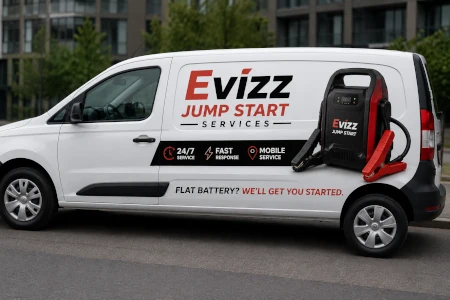
Rain is one of the most common triggers for flat batteries and damp electrics in the UK. If you need a professional car battery booster on site, we agree an upfront price before we come — typical arrival 20 to 40 minutes.
You walked out after a heavy downpour, turned the key — and nothing happened. Or worse, you heard a slow, weak crank before silence. If your car won’t start after rain, you’re far from alone. Wet weather is one of the most common triggers for battery and electrical failures in UK vehicles, and the good news is that the cause is usually straightforward to diagnose.
In this guide we’ll walk through every reason rain can stop your car from starting, what you can safely check yourself, and when to call a mobile jump start service rather than risk making things worse.
Why does rain stop a car from starting?
Modern vehicles rely on a complex network of electrical components, all of which are sensitive to moisture. Rain introduces water in ways that can disrupt ignition, charging, and power delivery — often without any obvious visible damage. Here are the most common culprits:
Weakened or failing battery
Cold, damp air increases the internal resistance of a battery, reducing the cranking power it delivers. A battery already near the end of its life may cope fine in dry conditions but fail completely after an overnight downpour.
Damp or flooded engine bay
Heavy rain can force water into the engine compartment through vents and drainage points. Moisture on battery terminals, ignition coils, or fuse boxes interrupts electrical flow and prevents the engine from firing.
Wet spark plugs or leads
Water on high-voltage ignition leads causes current to track along the lead surface rather than reaching the plug. This misfires or prevents ignition altogether — a classic rain-related no-start.
Corroded battery terminals
Repeatedly wetting and drying accelerates corrosion at the battery terminals. Even a thin layer of white or green oxidation creates enough resistance to prevent the starter motor from receiving sufficient current.
Water ingress into electrics
If your car has cracked seals, a blocked drainage channel, or a compromised boot seal, rainwater can reach the battery or the body control module under carpets or in the boot — silently draining the battery overnight.
Alternator or charging fault
A failing alternator may charge just enough during short dry-weather journeys. After cold, wet weather the battery discharges overnight and isn’t replenished — leaving you stranded in the morning.
Important: If your car has been through standing water (flood driving), do not attempt to start it. Water in the cylinders can cause catastrophic engine damage. Call a recovery specialist first.
What to check before calling for help
Before you call a jump start service, there are a few safe checks you can carry out from outside the vehicle — no tools required:
-
Listen when you turn the key. A rapid clicking sound indicates a battery with too little power to turn the starter. Complete silence often points to a blown fuse, a disconnected terminal, or a faulty starter relay. A single loud click can mean a seized starter motor.
-
Check your battery terminals visually. Open the bonnet and look at the battery terminals. If you see a white, blue, or green powdery crust, there is corrosion reducing your connection. Do not attempt to clean with water — use a dry cloth or a proper terminal cleaner spray.
-
Look for obvious water pooling. Check whether there is standing water inside the car (especially in the boot or under the rear seats) or visible moisture around the fuse box. This indicates a drainage or seal fault that needs attention alongside the starting issue.
-
Try switching on your headlights. If they are very dim or don’t come on at all, the battery is most likely the immediate cause. If they light up brightly but the car still won’t crank, the fault may be in the starter circuit or ignition system rather than the battery alone.
-
Wait 10–15 minutes in dry shelter if possible. Sometimes surface moisture on ignition components will evaporate enough to allow a start. If the engine fires but runs roughly and then smooths out, damp electrics were the likely cause.
Can I jump start a car that won’t start after rain?
In most cases, yes — if the root cause is a weakened or flat battery, a professional jump start will get you moving. A good-quality car battery booster delivers a clean, controlled surge of current without the voltage spikes that can damage modern electronics.
Where a jump start alone is not sufficient — for example if damp ignition components are the primary fault — a trained technician can identify this quickly and advise whether the car simply needs time and warmth, or whether a garage visit is needed for a deeper inspection.
At Jump Start Services, our mobile technicians carry professional car battery booster equipment designed for modern petrol, diesel, and hybrid vehicles. We cover Hertfordshire, Bedfordshire, Buckinghamshire, Surrey, Cambridgeshire and surrounding areas — 24 hours a day, seven days a week. We agree an upfront price before we come — no surprise charges on arrival.
How to protect your battery from wet weather failure
Keep terminals clean and tight
A quick visual check every few months costs nothing. Loose or corroded terminals are the most preventable cause of rain-triggered failures. Apply a small amount of petroleum jelly or dedicated terminal grease after cleaning to slow future oxidation.
Test your battery before winter
Most batteries have a service life of three to five years. A battery that is borderline in autumn will often fail during the first cold, wet spell of winter. A load test at any garage or auto parts shop takes a few minutes and can save you an unexpected breakdown.
Check your car’s drainage channels
Blocked sunroof drains, scuttle panel drains (at the base of the windscreen), and door drainage holes allow water to pool where it shouldn’t. If you notice damp carpets or water in the boot after rain, have the seals and drains inspected before the moisture reaches your electrical system.
Avoid short journeys in wet weather when possible
Short trips in cold, wet conditions mean your alternator never has long enough to fully recharge the battery after each cold start. If your car is regularly used for journeys under 15 minutes, consider using a trickle charger overnight once a week during autumn and winter.
Useful battery and breakdown guides
Trusted external guides and our own service pages for further reading on car battery failure and wet weather breakdowns.
Why drivers trust us after a wet-weather breakdown
- Upfront price agreed before we come — no surprise charges on arrival
- Professional car battery booster equipment for modern vehicles
- Mobile attendance at home, car parks, stations and safe roadside spots
- Post-start battery health check with straightforward advice
- 24/7 cover across Hertfordshire, Bedfordshire, Buckinghamshire and beyond
When should you call a professional?
Call for a mobile jump start straight away if any of the following apply:
- Your car won’t respond at all when you turn the key
- You hear rapid clicking but the engine won’t turn over
- You’re stranded at a roadside, car park, or motorway services
- It’s late at night or early morning and you need to get moving fast
- You’ve already tried jump leads from another car and it hasn’t worked
- You’re not confident handling battery connections safely
Attempting to force a start with flat jump leads, the wrong gauge cables, or an undersized portable pack can cause voltage spikes that damage engine management units, airbag systems, and infotainment modules — repairs that cost far more than a professional call-out.
Stranded after rain? We’ll come to you.
Jump Start Services operates 24/7 across Hertfordshire, Bedfordshire, Buckinghamshire, Surrey, Cambridgeshire and beyond. Our mobile technicians carry professional car battery booster equipment for cars, vans, SUVs, hybrids, and diesels — with an upfront price agreed before we set off.
About Jump Start Services: We are a mobile emergency battery and jump start specialist serving drivers across Hemel Hempstead, Watford, Luton, St Albans, High Wycombe, Aylesbury, Milton Keynes, Stevenage, Guildford, Cambridge and surrounding areas. Available 24 hours a day, 365 days a year. Learn more about us