
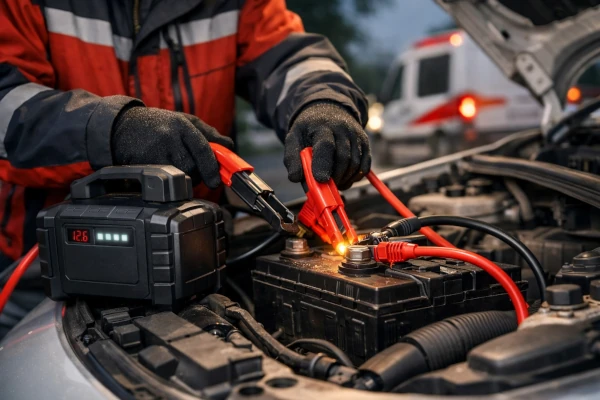
A flat battery is one of the most common reasons drivers need roadside assistance — at home, at work, in a supermarket car park, or at the roadside. Most battery-related breakdowns can be resolved quickly if you know what to check first.
A dead battery can disrupt your day without warning. The good news is that many call-outs are straightforward once the cause is identified — whether that is lights left on, an ageing battery, or a charging fault that needs a garage visit after a temporary boost.
This guide covers why batteries go flat, what to do safely when the car will not start, and when professional assistance is the better choice over a DIY jump start.
Why do car batteries go flat?
Modern vehicles rely heavily on battery power. Even when the engine is switched off, alarms, immobilisers, clocks and control modules draw small amounts of current around the clock.
Lights left on
Headlights or interior lights left overnight are still the most obvious cause — and the easiest to spot before you call for help.
Faulty alternator
If the charging system is not replenishing the battery while you drive, even a healthy battery will eventually fail to start.
Short journeys
Repeated five- to ten-minute trips may never give the alternator enough time to fully recharge after each start.
Cold weather
Cold reduces the chemical activity inside the battery. A unit that was marginal in autumn may fail on the first frosty morning.
Age and wear
Most car batteries last around three to five years in typical UK use. An old battery holds less reserve charge and fails more easily.
Accessories and long parking
Dash cams on parking mode, trackers, aftermarket alarms and weeks without driving all increase drain on the 12V system.
Many drivers discover the problem first thing in the morning — but flat batteries happen just as often in car parks, station forecourts and motorway service areas.
Signs your battery is failing
Recognising warning signs early can help you book a test before a complete breakdown.
- Slow or laboured engine cranking
- Rapid clicking when you turn the key or press start
- Dim headlights, especially when trying to start
- Dashboard battery or charging warnings
- Electrical systems behaving unusually — reset clock, lazy windows
- Stop-start system disabled or not functioning
- Car struggles to start after being parked overnight or for a few days
If you notice any of these symptoms, ask a garage or motor factor for a load test — many offer this free with a replacement quote.
What to do if your car won’t start
-
Stay calm. A flat battery is usually a straightforward issue. Panic leads to rushed decisions — especially at busy junctions or in multi-storey car parks.
-
Check for obvious causes. Look for headlights or interior lights left on, loose or corroded battery terminals, and any dashboard battery warnings before attempting a start.
-
Move to safety. If you are in live traffic, switch on hazard lights and move to a safe waiting area if possible. On a motorway or dual carriageway, follow National Highways guidance — leave the vehicle and wait behind a barrier if it is safe to do so.
-
Decide on the next step. If you have breakdown cover, call your provider. If you are not confident with jump leads or the handbook warns against DIY boosting, use a qualified roadside technician rather than risking damage to modern electronics.
Motorway safety: Do not attempt jump starts in a live lane. Move to a hard shoulder, services area or safe car park first. If you cannot reach a safe spot, call emergency services before working on the vehicle.
Why professional jump start assistance is often safer
Many drivers attempt DIY jump starts using cables from another vehicle. That can work on older cars, but modern vehicles carry sensitive control modules that can be damaged by reversed polarity, voltage spikes or poor connections.
Professional roadside assistance typically includes:
- Safe battery testing before and after the boost
- Booster equipment designed for modern electronics — not just basic jump leads
- Correct procedures for hybrids and EV 12V systems
- Honest advice on whether the battery needs replacement
- Assessment of charging system faults if the battery keeps failing
Can hybrid and electric vehicles need a jump start?
Yes. EVs and hybrids still rely on a conventional 12V auxiliary battery to wake computers, release brake interlocks and power control systems. A flat 12V battery can prevent the car from starting even when the main traction battery is fully charged.
Common examples where the 12V system matters include Tesla, Nissan Leaf, Kia EV6, Hyundai Kona Electric, MG4, Volkswagen ID models and Toyota hybrid ranges. Always use the 12V jump points shown in the owner’s handbook — never the high-voltage orange cabling.
How long does a roadside jump start take?
Times vary by location, traffic and demand — there is no fixed answer for every call-out. As a rough guide:
- Arrival time depends on where you are stranded and how busy the provider is
- Initial battery testing often takes five to ten minutes
- The boost procedure itself is usually quick once connections are made safely
- If the battery will not hold charge, replacement or recovery may add time
Planning ahead — breakdown cover details saved in your phone, exact location ready to share — saves time regardless of who attends.
When does a battery need replacing?
A jump start is often a temporary fix if the battery has reached the end of its life. Most car batteries last three to five years under normal UK conditions.
Consider replacement if:
- The battery repeatedly goes flat despite normal use
- It fails a load test or health check at a garage
- It struggles mainly in cold weather after passing a summer test
- The case is swollen, cracked or leaking
- Voltage stays low after a long drive or overnight charge
A technician or garage can confirm whether replacement is necessary — repeated jump starts on a failing battery only delay the inevitable.
How to prevent a flat battery
Drive regularly and long enough
Frequent use lets the alternator recharge the battery. Aim for journeys of at least twenty minutes when possible, especially if your routine is mostly short local trips.
Switch off electrical equipment
Check headlights, interior lights, heaters and accessories before locking the car. Remove or disable dash cams on permanent live feeds if the car will sit unused.
Keep terminals clean
Corrosion at the terminals creates resistance and mimics a weak battery. Clean and tighten connections, then apply terminal grease to slow future oxidation.
Test before winter and long trips
Load-test batteries over three years old in autumn and before holidays. Replacing a borderline unit before a fortnight away is cheaper than a failed return at airport parking.
Roadside assistance covers most vehicle types
Professional jump start and flat battery assistance is commonly available for cars, vans, SUVs, hybrids, electric vehicles, light commercial vehicles and fleet vehicles — whether you are at home, in a retail car park, a station forecourt or a safe roadside waiting area.
Common questions
Can a completely dead battery be jump started?
Often yes — professional booster packs deliver more controlled power than thin jump leads and can revive a deeply discharged battery. If the battery is old or damaged, it may start once but fail again quickly.
Will a jump start fix my battery permanently?
Not always. If the battery is nearing end of life or the alternator is faulty, a boost gets you moving temporarily but replacement or charging system repair may still be needed.
Is roadside assistance available for electric vehicles?
Yes. Most EV no-starts involve the 12V auxiliary battery, not the traction pack. Use manufacturer-approved 12V procedures only.
Can I jump start a car myself?
It is possible on some older vehicles if you follow the handbook exactly. On modern cars with stop-start, hybrids or sensitive electronics, incorrect procedures can cause expensive damage. When in doubt, use breakdown cover or a qualified technician.
How much does a roadside jump start cost?
Costs vary by provider, location, vehicle type and time of day. Reputable services usually confirm pricing before dispatch. Check your breakdown cover first — many policies include battery assistance.
Key points to remember
- Check lights, terminals and obvious drain before calling for help
- Move to a safe location before attempting any boost — especially on fast roads
- Warning signs like slow cranking mean a load test is overdue
- Hybrids and EVs usually need a 12V boost, not traction battery work
- Repeated flat batteries after a successful jump start mean replacement is likely
Useful battery and breakdown guides
Further reading from motoring organisations and official sources.