
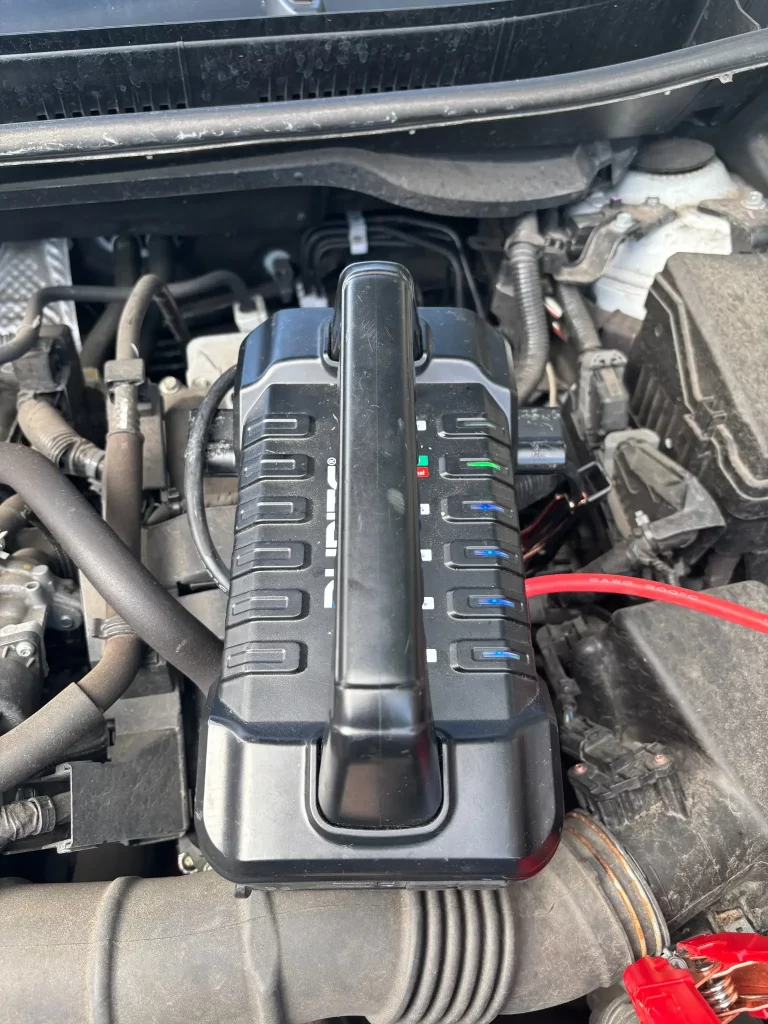
A dead battery at airport parking is common after one or two weeks away — usually down to slow drain and a battery that was already marginal before you flew.
You fly home, tired, bags in hand — and the car will not start. Dead batteries at airport parking are so common that meet-and-greet operators and long-stay operators often keep jump packs on site, yet queues still form on peak return days when dozens of cars fail at once.
Understanding why it happens helps you prevent it next time — and know what to do when you are already stuck.
Why airport parking kills batteries
Weeks of zero driving
A car parked for two to three weeks never gets alternator charge. The 12V battery slowly discharges while alarm, immobiliser, clock and ECU memory draw a small continuous current — typically a few milliamps that add up over days.
Keyless entry and security systems
Modern keyless cars periodically wake modules to scan for the key fob. Some vehicles enter a sleep mode after a few days; others continue higher parasitic draw, especially if a key is left too close to the vehicle in the house before departure.
Cold multi-storey decks
Undercover airport parking can be cooler than open air — but the real issue is still time parked, not temperature alone. A battery already weak before your holiday fails in week two, not week one.
Pre-holiday short journeys
Many drivers run errands right before the airport — short trips that never fully recharge the battery — then leave the car for fourteen days. The battery lands at the airport already partially depleted.
Aftermarket alarms and trackers
Fleet trackers, dash cams wired to permanent live feeds and aftermarket alarms increase parasitic drain. Operators may not mention this when you drop the car off.
Age and stop-start wear
A four- or five-year-old battery on a stop-start car may test fine at home but lack the reserve capacity for a fortnight of alarm duty plus one cold start attempt on return.
What to do when you get back to a dead car
Confirm it is the battery Rapid clicking when you press start usually means low 12V voltage. Completely dead dashboard lights also point to battery or terminal fault. Unusual smells or smoke mean stop — do not jump.
Contact parking operator first Many long-stay sites offer a free or paid boost service. Ask at the exit booth or call the number on your ticket — but expect delays on busy Sunday evenings when demand spikes.
Send your exact location Multi-storey codes, colour zones, row and bay number help any mobile technician or operator find you quickly. A photo of the nearest pillar sign saves time.
Avoid repeated cranking Each failed start attempt drains the battery further. Wait for a booster rather than cycling the key ten times.
Plan a battery test after a successful start If the car starts after a boost but the battery is more than four years old, have it load-tested locally. It may fail again on the drive home if it cannot hold charge.
Meet-and-greet tip: Tell the operator your return flight number if the battery was flat on a previous trip. Some services will connect a maintainer or run the car periodically for long bookings — worth asking when you book.
How to reduce the risk next holiday
A smart maintainer or trickle charger connected at home before you leave a car in the driveway is the gold standard. At airport parking, options are limited — but a pre-trip battery load test, a long motorway run the day before flying, and disconnecting unnecessary aftermarket devices all help.
If your battery is over four years old, replacing it before a three-week trip is usually cheaper than recovery fees, missed meetings and a stressful return.
Key points to remember
- Alarms, immobilisers and keyless systems draw power every hour the car sits
- Ask the parking operator about on-site boost services before you crank repeatedly
- Load-test and replace ageing batteries before a long trip
- A long drive the day before flying helps the battery cope with the stay
Useful battery and breakdown guides
Further reading from motoring organisations and official sources.