
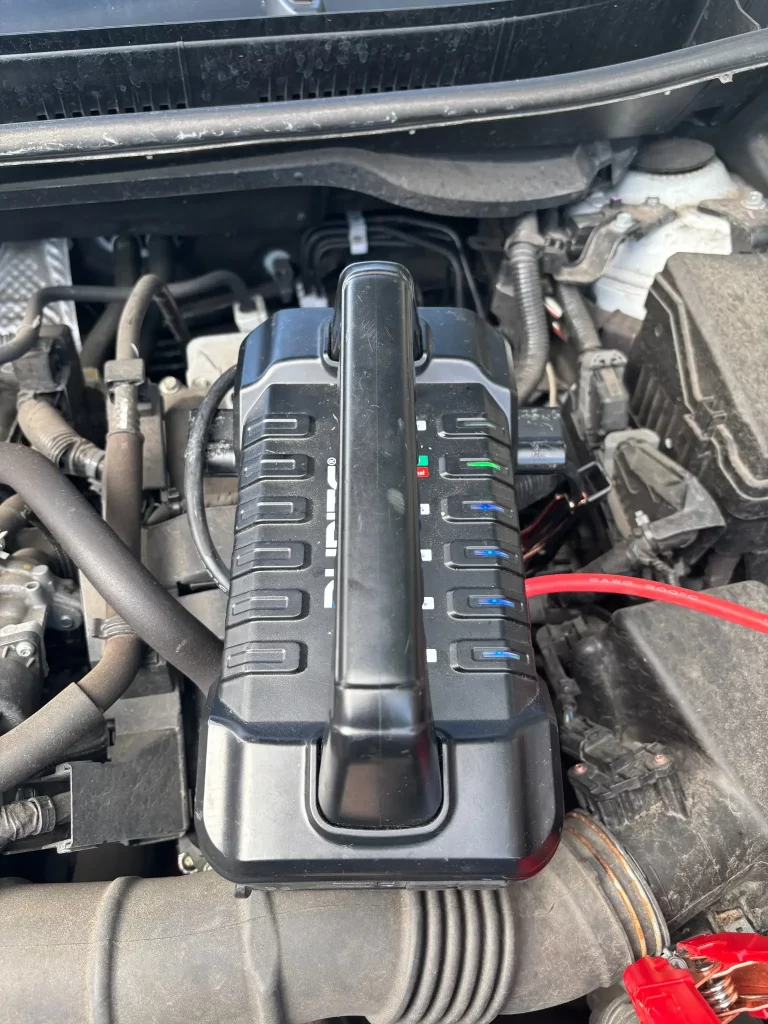
Jump starting a car can be safe when it is done correctly. The problem is that modern vehicles are more sensitive than many drivers realise. A simple mistake with jump leads, polarity or the wrong connection point can damage expensive electronics.
Most drivers will face a flat battery at some point. It might happen after leaving the lights on, during cold weather, after a vehicle has been parked for several days, or when an older battery is close to failing. In many cases, a jump start can get the car moving again, but it should always be treated as a careful procedure rather than a quick guess.
Modern cars, vans, hybrids and stop-start vehicles often have battery management systems, sensors and control modules connected to the 12V system. Connecting leads the wrong way round or using the wrong jump point can cause faults that are far more expensive than the original battery problem.
This guide explains when jump starting may be suitable, when it should be avoided, and what safety points every driver should understand before attempting to restart a vehicle with a flat battery.
Situations where jump starting is not recommended
Before connecting any jump leads or booster pack, check the condition of the vehicle and battery area. If anything looks unsafe, do not continue. A flat battery is frustrating, but forcing a jump start in the wrong situation can create a fire risk, electrical damage or personal injury.
- The battery case is cracked, swollen, leaking or badly corroded
- The vehicle has been flooded or has stood in deep water
- You smell sulphur, burning or notice smoke near the battery area
- You can see damaged cables, loose terminals or melted plastic
- The vehicle is a hybrid or EV and you are unsure where the 12V jump points are
- The manufacturer handbook warns against jump starting your model
- You are not certain which terminal is positive and which is negative
- The vehicle is stopped in a dangerous position, such as a live lane or unsafe roadside location
Important safety warning: never connect jump leads to orange high-voltage cables on a hybrid or electric vehicle. These are not jump start points. If you are unsure, stop and use professional breakdown assistance.
Why correct polarity matters
Polarity simply means connecting positive to positive and negative to a safe earth point. It sounds simple, but mistakes happen quickly, especially in poor light, bad weather or when the battery is hidden under covers or located away from the engine bay.
Reversed polarity can damage engine control units, ABS systems, body control modules, infotainment systems and charging circuits within seconds. If jump leads have been connected incorrectly, do not keep trying to start the car. Disconnect safely if you can, leave the vehicle switched off and seek professional help.
Jump leads, booster packs and other methods
Traditional jump leads
Jump leads use power from another vehicle. They can work well when good-quality leads are used and the correct procedure is followed, but poor clamps, thin cables or wrong connection points can create sparks and voltage problems.
Professional booster packs
A professional booster pack provides controlled power without needing a donor vehicle. Many mobile technicians use this method because it is cleaner, faster and safer when used correctly on modern 12V systems.
Small portable boosters
Consumer booster packs can be useful, but they must be charged and powerful enough for the vehicle. A small booster may struggle with larger diesel engines, vans or batteries that are deeply discharged.
Push or bump starting
This is not suitable for many modern vehicles. Avoid bump starting automatics, hybrids, most diesel vehicles and stop-start cars. It can cause transmission, clutch or electrical system problems.
Safe jump start procedure for a conventional 12V vehicle
If the battery looks safe, the vehicle handbook allows jump starting, and you are in a safe location, the following steps explain the general process for a conventional 12V vehicle. Always follow your own vehicle handbook where it gives model-specific instructions.
-
Make the area safe first Park away from moving traffic if possible. Apply the handbrake, switch off both vehicles, remove unnecessary electrical loads, and keep metal jewellery or loose clothing away from the battery area.
-
Identify the correct jump points Find the positive terminal or dedicated positive jump point first. Some vehicles have the battery in the boot or under a seat, with jump points placed under the bonnet.
-
Connect positive to positive Attach the red lead to the positive point on the flat battery vehicle, then connect the other red clamp to the positive terminal of the donor battery or booster pack.
-
Use a safe earth point Connect the black lead to the donor vehicle negative terminal, then connect the other black clamp to a clean metal earth point on the vehicle with the flat battery, away from the battery where possible.
-
Start carefully Start the donor vehicle or activate the booster pack. Wait a short time, then try to start the flat battery vehicle. Do not crank the engine continuously. If it does not start after a few attempts, stop and seek help.
-
Remove leads safely Once the vehicle is running, remove the leads in reverse order. Keep the clamps apart and do not allow them to touch each other while connected.
-
Do not ignore the battery afterwards A jump start is usually a temporary solution. Drive long enough to allow some charging, then arrange a battery and charging system check. If the vehicle fails again, the battery may need replacing.
Extra care for hybrids, EVs and stop-start vehicles
Many hybrid and electric vehicles still use a 12V battery for control systems, locks and starting the vehicle systems. However, the correct jump points may be different from a normal petrol or diesel car. Always use the handbook and only connect to the approved 12V jump points.
On hybrids, the vehicle may not crank like a normal engine. You may need to look for the ready light or follow a specific start sequence. Never guess, and never connect jump leads to orange high-voltage cables.
Stop-start vehicles may use AGM or EFB batteries with battery management systems. A jump start may get the car moving, but repeated flat battery issues often mean the battery is weak or not being charged correctly. If the battery is replaced, some vehicles require coding or a battery management reset.
Roadside safety matters as much as the battery
If your vehicle has stopped on a busy road, slip road, roundabout, dual carriageway or motorway, personal safety comes first. Do not stand between vehicles, do not work close to moving traffic, and do not attempt a jump start if the vehicle is in a dangerous position.
Use hazard lights, move passengers to a safe place where possible, and contact breakdown assistance if you cannot work safely. A battery problem can be fixed; taking risks beside fast-moving traffic is never worth it.
Final safety advice
A successful jump start should be treated as a temporary fix until the battery and charging system can be checked. Keep these points in mind to reduce the risk of damage and future breakdowns.
- Never jump start a swollen, leaking, cracked or flooded battery
- Always check the correct positive and earth points before connecting
- Use only approved 12V jump points on hybrids and EVs
- Stop immediately if you smell burning, see smoke or notice sparks
- If the vehicle fails again after a jump start, the battery likely needs testing or replacement
- If you are unsure, use professional mobile jump start assistance rather than guessing
Useful battery and breakdown guides
Further reading from trusted motoring organisations and official road safety sources.